
DIY standing seam roof kits
A metal roof,
cut for your project.
We form standing-seam panels to your roof dimensions and prepare the trim and components you need to install it yourself.
For homeowners, owner-builders and contractors comfortable taking on their own installation.
What you actually get
What comes in a kit.
A project-specific package built around your roof. Typical kit components may include the following — the exact contents depend on your roof and are confirmed with you before anything is formed.
01 Roof panels
Standing-seam panels formed and cut to the required lengths for your roof.
02 Trim
Project-specific eave, rake, ridge, valley and transition trim as applicable.
03 Flashing components
Metal details worked out from the roof configuration you send us.
04 Fasteners & accessories
Clips, screws, closures and related components where included in the package.
05 Material plan
Organised quantities and lengths based on the roof information you submit.
06 Installation information
Reference material appropriate to the system supplied.
Who this is for
Is a kit right for your project?
Standing seam is a precise system. Guesswork shows. Here is how to work out whether a kit is the right call for your project.
Good fit
- Experienced DIYers, builders, carpenters and tradespeople
- Owner-builders running their own project
- Homeowners working alongside a knowledgeable helper or contractor
- Straightforward new construction
- Garages, shops, cabins and simple residential roofs
Think twice if
- The roof is very steep
- There are many valleys, dormers or intersecting planes
- Access to the roof is difficult
- You are not comfortable working at height
- You have not done exterior construction before
- There are structural or decking issues to resolve first
- The job needs specialised fall protection or complex flashing
Working at height is the real risk, not the metal. Roofing requires appropriate fall protection, tools, site conditions and construction knowledge. Assess your own project honestly, and bring in help where you need it.
How to install metal roofing →
From your roof to our roll former
Four steps from measurements to metal.
You do not need a finished material list to start. You need enough information about the roof for us to work out what it takes.
01
Send the project.
Plans, roof dimensions, measurements or whatever project information you have.
02
We review the roof.
We work out panel lengths, trim requirements and what else we need to know.
03
We form the metal.
Panels are roll-formed to the required lengths and trim is prepared for the job.
04
Pick up or arrange delivery.
Receive the package and install it on site.
Why factory direct matters
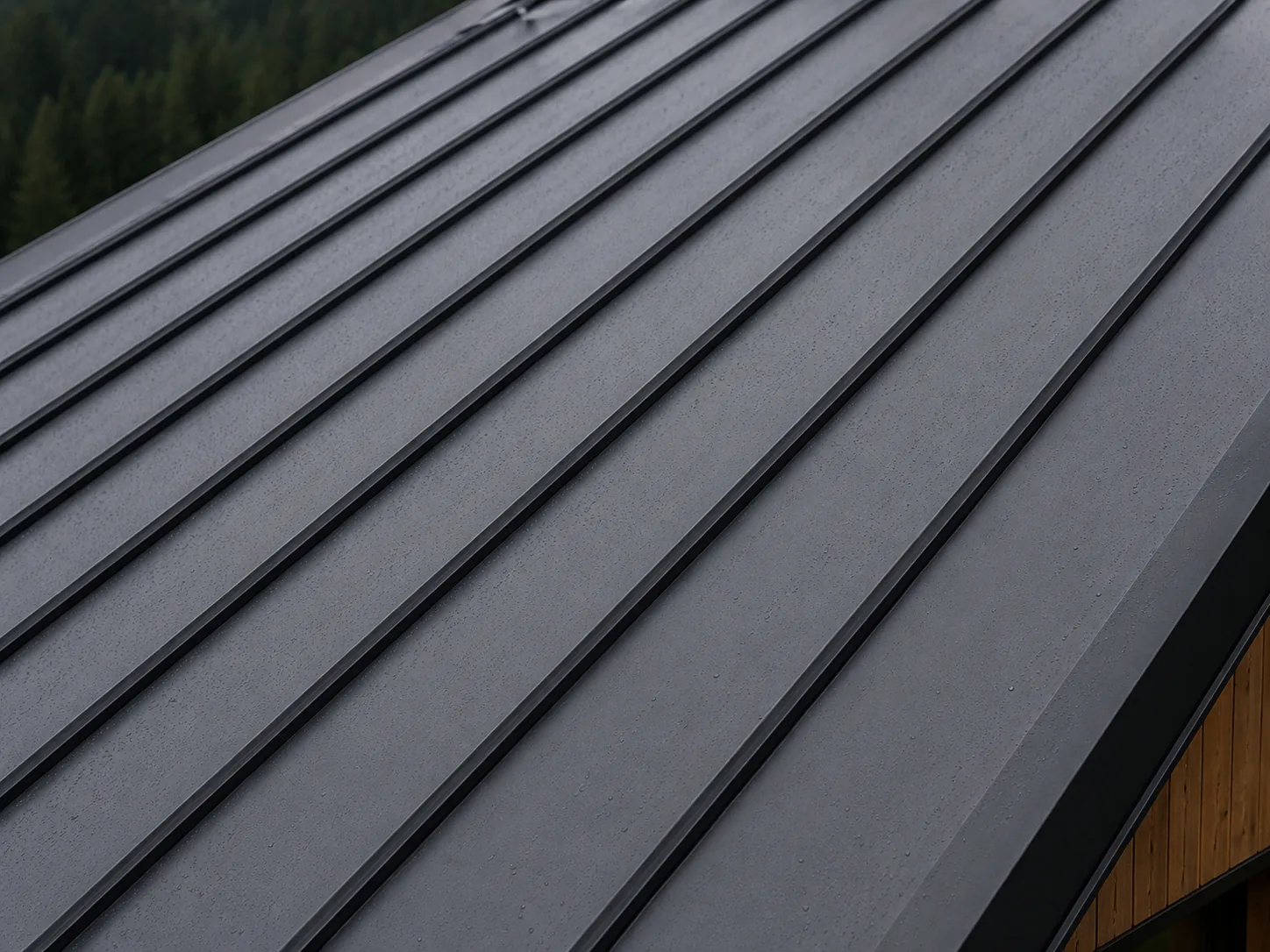
Fewer unnecessary laps. Cleaner roof lines.
Forming panels for a specific project means we can run long continuous lengths where the roof allows it, instead of working around whatever stock lengths a retailer happens to carry.
Fewer laps
Lengths set by the roof
Cut for the roof
Not trimmed from stock
Consistent profile
One machine, one run
Panel length is subject to project design, handling, transport and manufacturing requirements. Longer is not automatically better — we will tell you what makes sense for your roof.
What we need from you
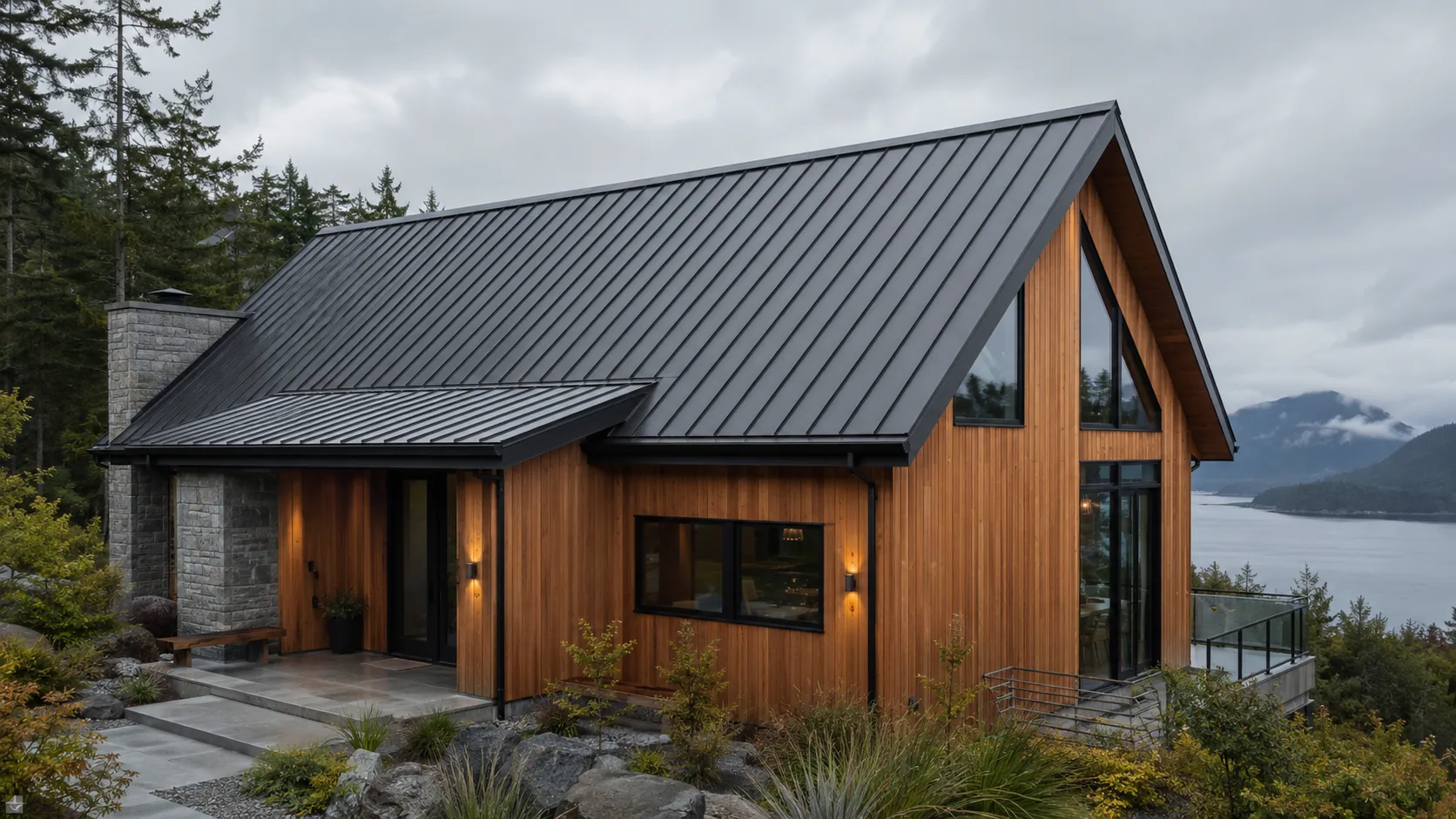
Start with what you have.
You do not need to speak roofing to get started. Send whatever describes the roof and we will work out what is missing.
Drawings
Architectural drawings or roof plans, if you have them.
Dimensions
Measurements or a sketch with lengths on it.
Photos
Pictures of the existing roof or the framing as it stands.
A takeoff
An existing material list, if one has already been done.
Simple roof vs complex roof
Some roofs are a weekend. Some are not.
The shape of the roof matters more than its size. Here is roughly how projects sort themselves out.
Straightforward projects
- Simple gable
- Shed roof
- Garage or shop
- Cabin
- Uncomplicated addition
These are generally the easiest projects to plan, package and install.
More complex projects
- Multiple valleys
- Dormers and skylights
- Intersecting roof planes
- Chimneys and complicated transitions
- Very steep slopes
These need more flashing work, more planning and more installation experience. They are not off the table — they just need a closer look.
Kit or installed
Same roofing. Different amount of labour.
DIY roof kit
You install it.
You handle:
- Site preparation
- Installation and labour
- Safety and fall protection
- Tools and equipment
- Final execution
We handle: forming the roofing you order, the supplied components, and project-specific material preparation as agreed.
Professional installation
Our crew installs it.
Our crew handles:
- Roofing installation
- Project execution
- Flashing and details within scope
- Roofing labour
Same panels, same factory. You are buying the labour instead of supplying it.
Pickup & delivery
Long panels change the logistics.
A full-length roof panel is not a trip to the hardware store. Standing-seam panels need appropriate handling and transport to arrive straight and undamaged, and that shapes how a kit gets to you.
Factory pickup
Customers and contractors with a suitable vehicle or trailer can arrange pickup from the shop.
Local delivery
Delivery options may be available depending on the project location and the panel lengths involved.
Longer distances
Kits going outside the immediate area have to be planned around panel length, freight and damage prevention. Talk to us early if this is you.
Why standing seam
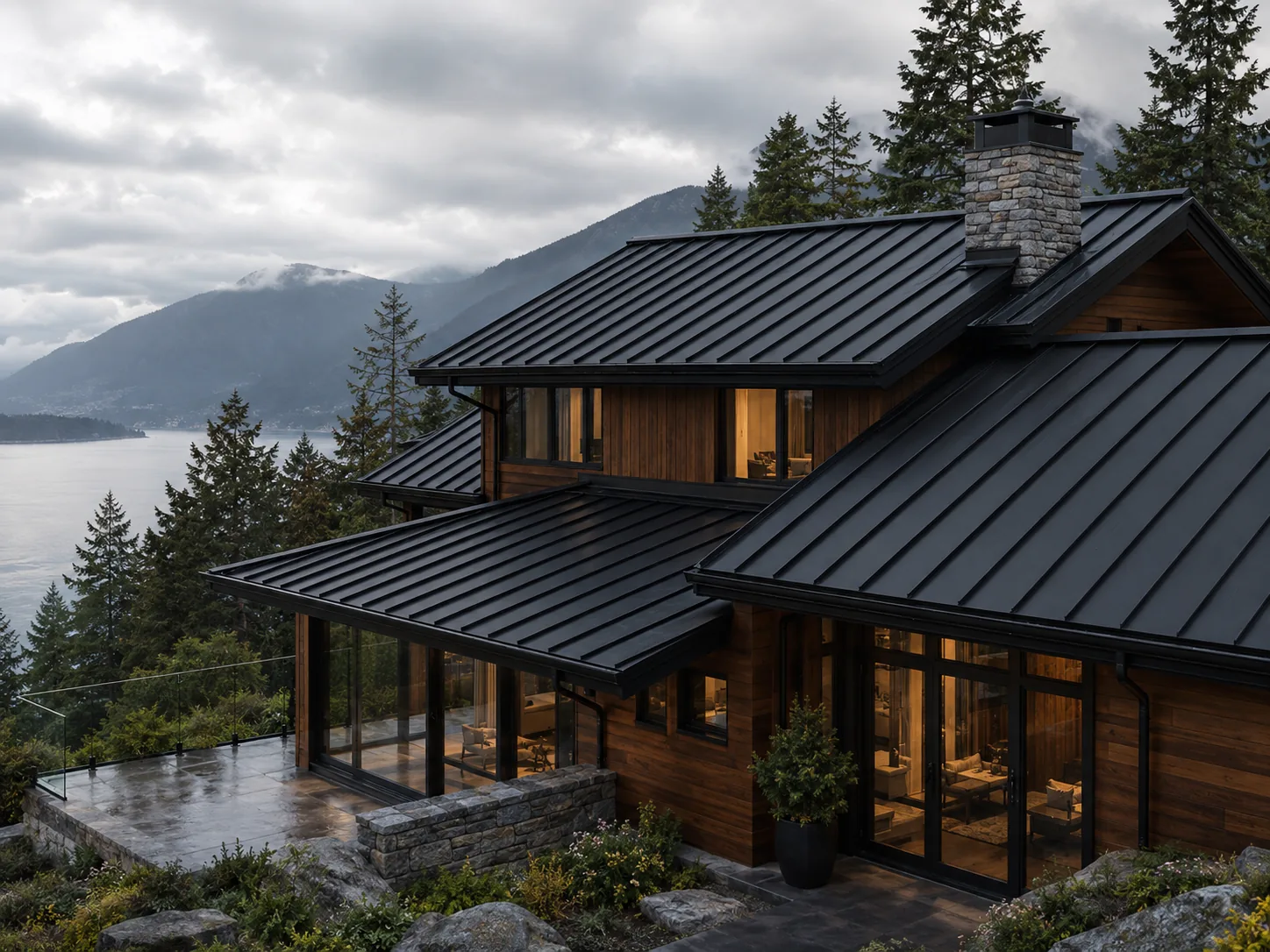
Why standing seam.
- Concealed fasteners — nothing punched through the weather surface
- Clean architectural appearance
- Strong water-shedding geometry
- Minimal exposed penetrations on the roof field
- Long continuous panels where practical
- Suits modern and traditional architecture alike
Tools & setup
Tools and site setup you’ll need.
We supply the roofing, not the job site. Exact tools and requirements depend on the roof and the system supplied, but plan for roughly this.
- Snips and metal-cutting tools appropriate to the system
- Seaming and detail tools
- Cordless tools
- Layout and measuring tools
- Ladders or scaffolding
- Fall protection
- Material handling for long panels
- Proper footwear
- A clean, sound working surface
Price your roof in about two minutes
Weighing a kit against having it installed? Outline your roof on the satellite map and see an estimated range for the installed roof straight away. Kits themselves are priced per job.
Questions
Before you send the roof.
Start your project
Send us the roof.
We’ll tell you what we need next.
Plans, measurements, sketches or photos are enough to start the conversation.