
Standing seam metal roofing
The roof is simple.
The details aren’t.
Standing seam uses raised interlocking seams with the primary fasteners concealed beneath the roof surface, producing clean uninterrupted roof planes.
What is standing seam?
A standing seam roof is made of long metal panels that run from the ridge down to the eave. Where two panels meet, the edges are turned up and joined together into a raised seam that stands proud of the roof surface — which is where the name comes from.
The important part is what you cannot see. The panels are held down by clips or a concealed flange underneath the seam, so the screws never pass through the flat of the roof. On an exposed-fastener roof, the screws go straight through the panel and are sealed with a rubber washer. On a standing seam roof, there is nothing punched through the part of the roof that water runs over.
That single difference drives most of what follows: the appearance, the maintenance profile, and the reason it costs more to build.
How the system works
Four parts doing four jobs.
01 The panels
Formed from coil to the length of the roof slope. Running full length where practical means no horizontal laps across the middle of the plane.
02 The seam
The raised joint between panels. It holds the two edges together and lifts the joint above the water running down the roof.
03 The fastening
Concealed beneath the seam. Nothing penetrates the weather surface of the roof field, which is the whole point of the system.
04 The trim
Eave, rake, ridge, valley and transition details. This is where the roof is actually won or lost.
Standing seam vs exposed fastener
Standing seam or exposed fastener.
Exposed-fastener metal is a perfectly sound roof for the right building. It is simpler, quicker to install and cheaper. Here is the actual difference.
Standing seam
- Fasteners concealed beneath the seam
- Uninterrupted planes, architectural appearance
- No exposed washers on the roof field to age
- More trim work and more installation skill
- Higher material and labour cost
- Clamp-on solar without roof penetrations
Exposed fastener
- Screws visible through the panel face
- Utility appearance — common on shops, barns, outbuildings
- Washers are a wear item and are periodically checked
- Simpler and faster to install
- Lower cost
- A sensible choice where budget or building type calls for it
Which is right depends on the building, the exposure and the budget — not on which one a roofer prefers to sell. We install both and will say which we would put on the building.
Why people choose it
You stop buying roofs.
The case for standing seam is not one dramatic advantage. It is a set of small ones that compound over a long time on the roof.
01
Clean architectural appearance.
Long unbroken planes with no fastener pattern across them.
02
Concealed fasteners.
Nothing through the weather surface of the roof field.
03
Continuous panel lengths.
Where the roof allows, fewer laps to seal and maintain.
04
Sheds rain and snow.
A smooth surface holds less moss and moisture than shingle.
05
Solar without drilling.
Seam clamps mount an array without penetrating the roof.
06
Low routine maintenance.
No exposed washers on the field to inspect and replace.
Why it suits this coast
Vancouver Island roofs do not fail from heat. They fail from water, and from everything water brings with it.
A wet winter under tree cover is the hard case here: months of rain, shade that never fully dries, and moss that establishes on any surface rough enough to hold it. A smooth metal plane with continuous panel runs gives that far less to work with than a shingle roof does, and it sheds heavy rain quickly rather than holding it at every lap.
Coastal architecture also happens to suit it. The long clean planes of a standing seam roof sit naturally on the cedar-and-glass buildings people put on this coast.
We are not going to make specific corrosion or coating claims here. Coastal exposure varies enormously between a sheltered inland lot and a beachfront one, and the right answer depends on product documentation for the specific coil. Ask us about your site rather than trusting a general statement.
Your roof’s shape decides the difficulty
A big simple roof is easier and cheaper per square foot than a small complicated one, and it is also the difference between a project a competent builder can take on and one that really wants an experienced crew.
Straightforward
- Simple gable or shed roof
- Few or no penetrations
- Continuous runs ridge to eave
- Garages, shops, cabins, clean additions
More detailing
- Valleys where planes intersect
- Dormers and skylights
- Chimneys and vent penetrations
- Transitions between pitches
- Very steep slopes and difficult access
None of that rules a roof out. It just changes who should be on it, and how long it takes. If you are weighing up doing it yourself, this is the honest place to start — the DIY roof kits page goes through it properly.
Three ways to buy
Same roofing. Pick your level of involvement.
01
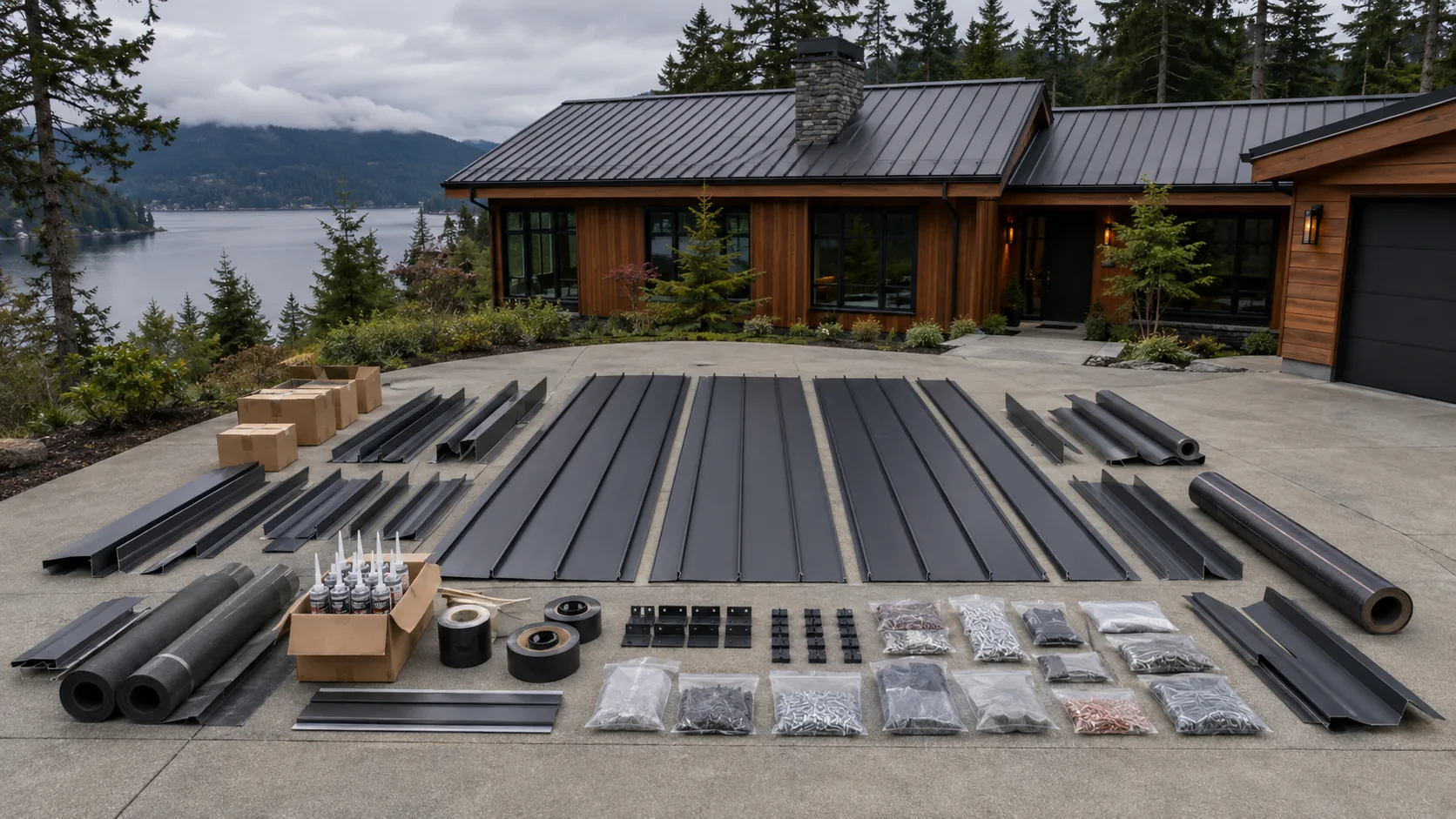
DIY Roof Kits
Panels, trim and components cut for your project. You install it.
02
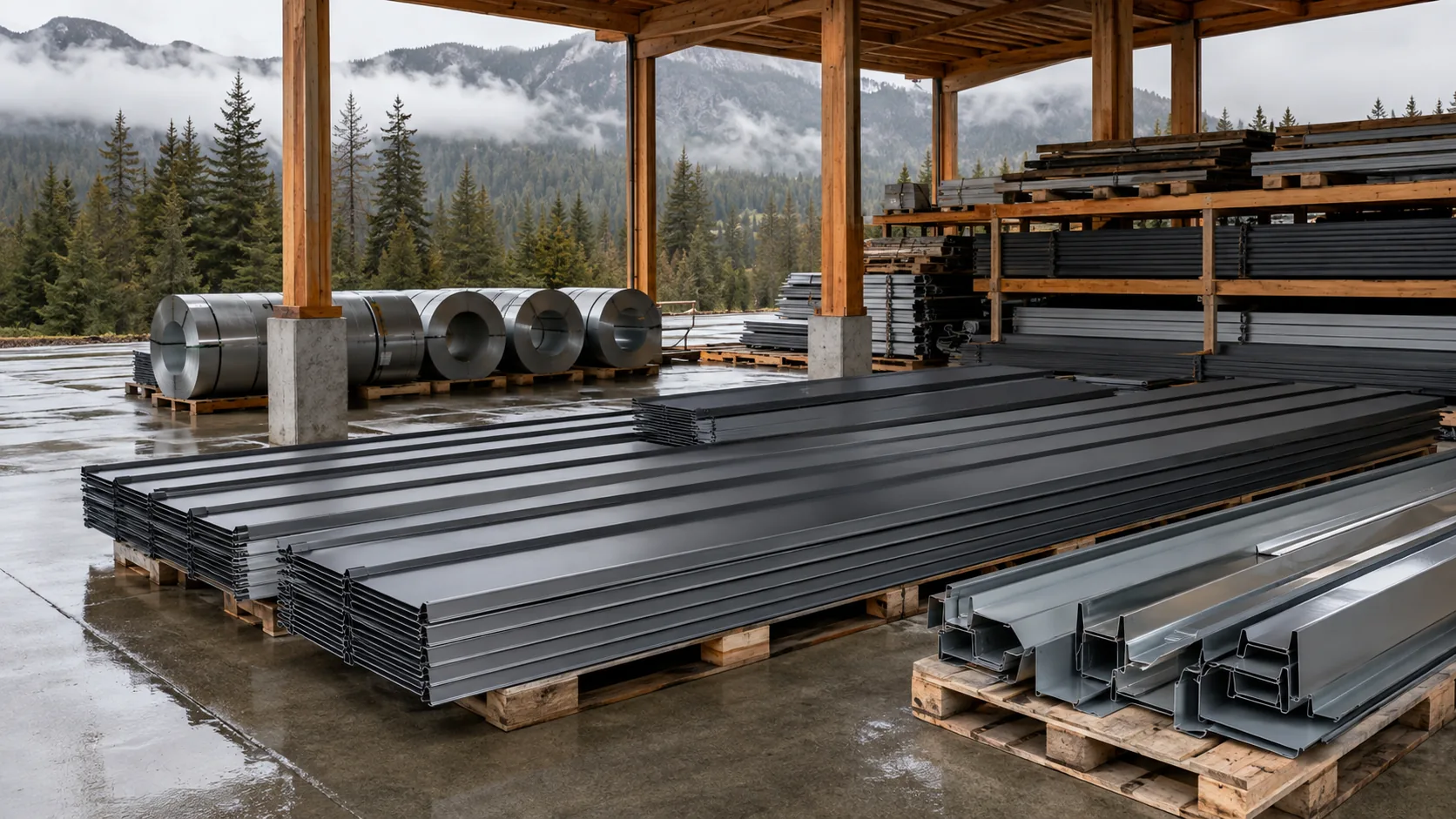
Contractor Supply
Custom-length panels and trim for builders, roofers and trades.
03
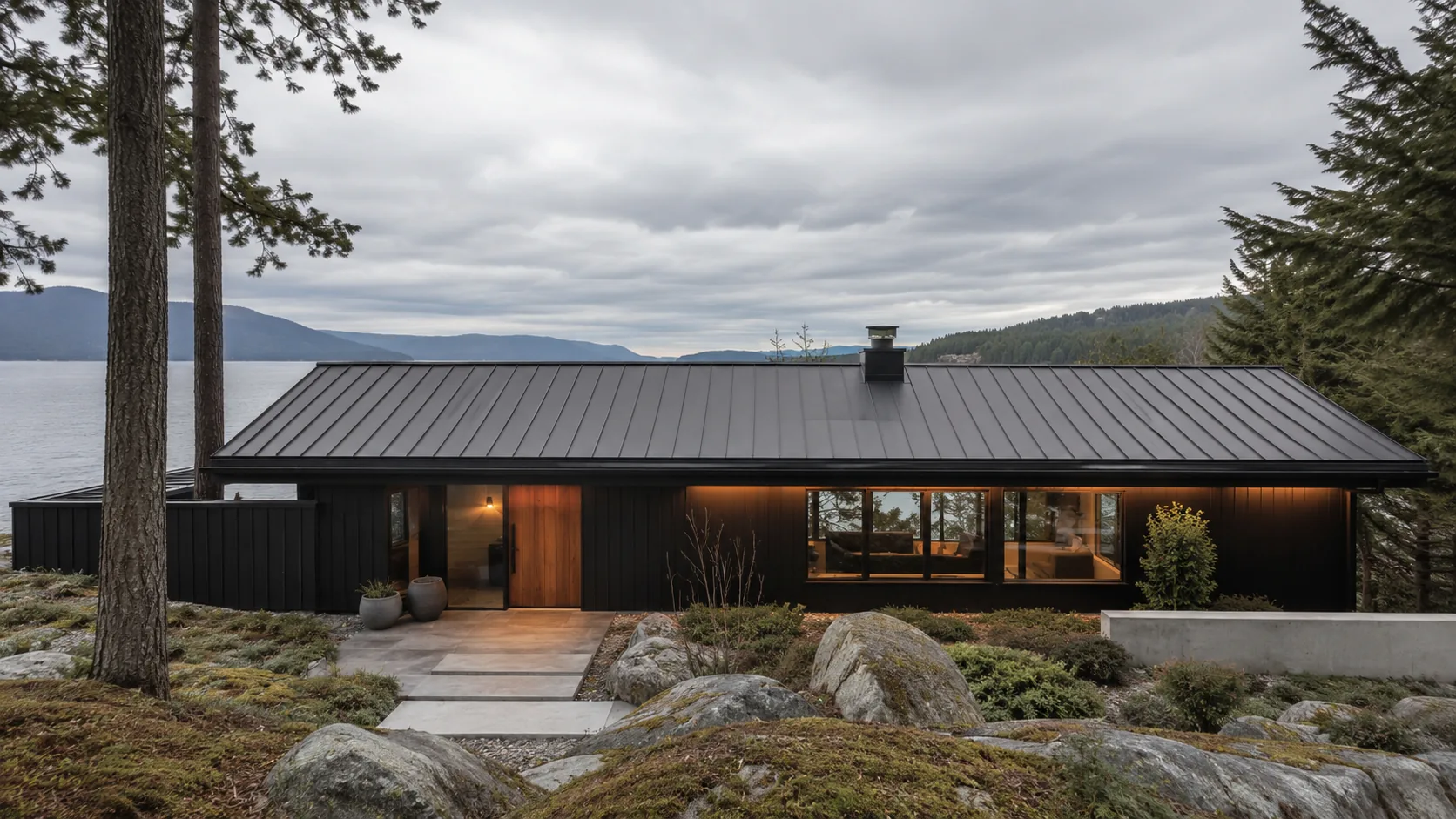
Professional Installation
Our crew forms it and installs it across Vancouver Island.
Price your roof in about two minutes
Find your house on the satellite map, outline the roof and see an estimated range straight away. It is an estimate rather than a quote, and you see it before we ask for any details.
Standing seam
One system.
Three ways to get it.
Build it yourself, buy the metal for your crew, or have ours install it.